



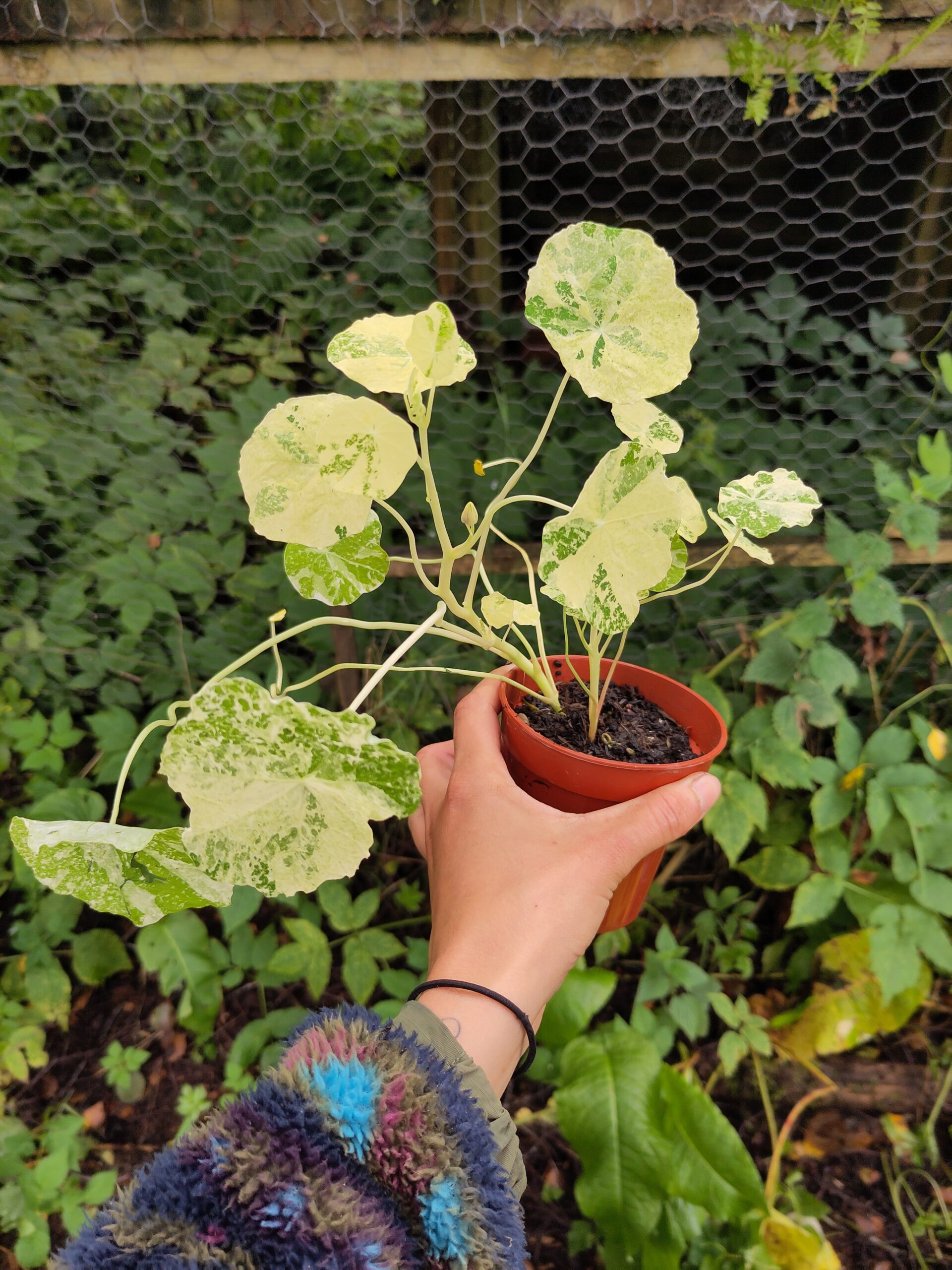
Nasturtium

£8.00

Plants are pick up only. No postage, sorry.

Nasturtium has long been used in Andean herbal medicine as a disinfectant and wound-healing herb, and as an expectorant to relieve chest conditions. All parts of the plant appear to be antibiotic and an infusion of the leaves can be used to increase resistance to bacterial infections and to clear nasal and bronchial catarrh. The remedy seems to both reduce catarrh formation and stimulate the clearing and coughing up of phlegm. The leaves are antibacterial, antifungal, antiseptic, aperient, depurative, diuretic, emmenagogue, expectorant, laxative and stimulant. A glycoside found in the plant reacts with water to produce an antibiotic. The plant has antibiotic properties towards aerobic spore forming bacteria. Extracts from the plant have anticancer activity. The plant is taken internally in the treatment of genito-urinary diseases, respiratory infections, scurvy and poor skin and hair conditions. Externally it makes an effective antiseptic wash and is used in the treatment of baldness, minor injuries and skin eruptions. Any part of the plant can be used, it is harvested during the growing season and used fresh. The German Commission E Monographs, a therapeutic guide to herbal medicine, approve Tropaeolum majus Nasturtium for urinary tract infections, cough, bronchitis.

Pound sterling (£) - GBP
  • Rubha Rocks (RR) - MYC
  • Pound sterling (£) - GBP

Sold By: Herbalist

Description

Information credit goes to PFAF

Tropaeolum majus is a PERENNIAL CLIMBER growing to 3.5 m (11ft) by 1.5 m (5ft) at a fast rate.
See above for USDA hardiness. It is hardy to UK zone 9 and is frost tender. It is in flower from July to September, and the seeds ripen from August to October. The species is hermaphrodite (has both male and female organs). The plant is self-fertile.
It is noted for attracting wildlife.
Suitable for: light (sandy) and medium (loamy) soils, prefers well-drained soil and can grow in nutritionally poor soil. Suitable pH: mildly acid, neutral and basic (mildly alkaline) soils. It cannot grow in the shade. It prefers moist soil.

Avoid for infants or small children and patients with gastrointestinal ulcers or kidney disease. Irritation of the mucous membrane of the gastrointestinal tract.